A thoughtful home usually isn’t the one with the most decor.
It’s the one where little things seem to make sense.
There’s a place to set your keys when you walk in. The light feels good at night. The things you use often are easy to reach. A room feels finished without being crowded.
Those details can make a home feel more intentional without requiring a renovation or a long shopping list.
Here are some of the small changes I think make the biggest difference.
1. Put a landing spot where things naturally pile up
If the same things keep collecting in one place, that spot is telling you something.
Instead of fighting it, give that area a purpose.
A small tray near the door can hold keys and sunglasses. A shallow basket can catch mail. A hook can keep a frequently used bag off the floor.
Entry “drop zones” are a recurring recommendation because they give everyday items somewhere obvious to go instead of letting them spread into other rooms.
The thoughtful part isn’t the tray or hook itself.
It’s putting it exactly where you need it.
2. Fix the lighting before buying more decor
A room can be beautifully furnished and still feel flat if the lighting is wrong.
One overhead fixture often has to do too much.
Adding a table lamp, floor lamp, or wall light can make a room feel warmer and more finished, especially in the evening. Designers frequently recommend layering different sources of light rather than relying on one bright fixture.
This is one of those changes that affects the entire room without adding much physical clutter.
3. Give the awkward empty spot a job
Not every empty corner needs decor.
Sometimes it needs a function.
A narrow wall near the entrance might become a place for hooks. The end of a hallway might hold a slim cabinet. A small corner beside a chair might need a side table more than another plant.
When you notice a spot that feels unfinished, ask what would make that part of the room more useful before asking what would make it prettier.
Often, usefulness is what makes the room feel finished.
4. Make the things you touch every day feel better
Small upgrades have more impact when they affect something you use constantly.
That could mean changing an uncomfortable cabinet pull, replacing a worn bath mat, adding a better bedside lamp, swapping an awkward hamper, or putting a small tray next to the sink.
These aren’t dramatic improvements.
But when something feels easier every single day, you notice it.
That’s where I’d spend money before buying another decorative object.
5. Use hooks where real life actually happens
Hooks are one of the simplest ways to make a home work better, but placement matters.
A hook behind a bathroom door can hold a robe or towel. One near an entry can catch a bag or jacket. A few hooks in a laundry area can hold items that would otherwise land on a chair.
Wall hooks are especially useful in smaller homes because they make use of vertical space without taking up floor space.
The best ones are almost invisible when they aren’t being used.
6. Leave a little space instead of filling every surface
Sometimes a home feels more thoughtful because of what isn’t there.
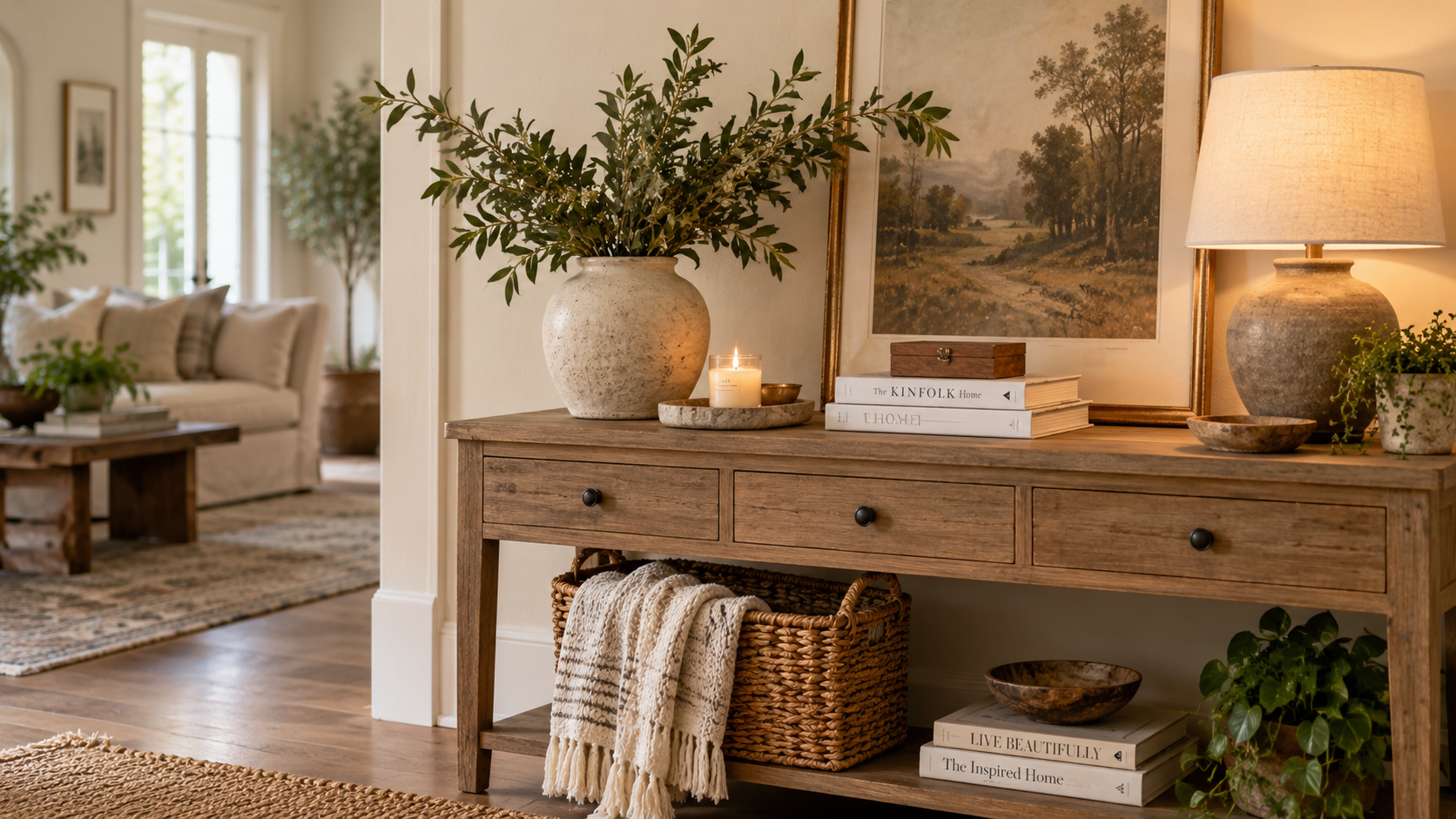
A console doesn’t need to be covered from one end to the other. A bookshelf doesn’t need something on every shelf. A bathroom counter doesn’t need five decorative containers.
Leaving some open space makes the things you do keep visible feel more intentional.
The same idea applies inside cabinets and drawers. Organizing professionals often recommend leaving breathing room instead of filling storage to maximum capacity, because it makes spaces easier to use and maintain.
7. Create one controlled place for temporary clutter
Not everything can be dealt with the second it enters the house.
Returns, school papers, packages, things that need to go upstairs, and items waiting to be donated all exist somewhere between “put away” and “finished.”
Instead of letting those things spread across chairs and counters, give them one temporary holding spot.
A basket, tray, or designated shelf can contain the mess until you’re ready to deal with it.
This kind of controlled clutter zone is increasingly recommended as a realistic alternative to expecting every surface to stay perfectly clear.
8. Let one useful object do more than one job
A small home feels more considered when pieces earn their place.
A bench can provide seating and shoe storage. A pretty bowl can hold keys. A tray can organize toiletries and protect a vanity surface. A floor lamp with shelves can provide light and storage without adding another table.
Multi-purpose pieces are especially useful when you want the home to feel functional without crowding it with furniture.
9. Make one high-friction routine easier
Think about the thing in your home that annoys you repeatedly.
Maybe shoes are always in the walkway. Chargers are always missing. Towels never make it back to the bathroom. Mail lands everywhere.
Instead of trying to “be more organized,” change the setup around that one routine.
Add the shoe basket.
Create the charging spot.
Put the towel hooks where people actually reach for them.
Small changes work best when they remove one repeated annoyance from everyday life.
10. Make small improvements before you make big ones
A room often tells you what it needs once you spend some time living in it.
Before buying new furniture or starting a bigger project, try one smaller adjustment.
Move the lamp. Add a hook. Rearrange the furniture. Clear one surface. Give something a permanent place.
Even professional organizers increasingly recommend smaller, focused organizing sessions because they are easier to complete and maintain than large all-at-once projects.
Sometimes the smallest change is enough to show you what the room actually needed.
Where I’d Start
I’d look for the places in your home where something feels slightly inconvenient.
Not broken. Not terrible.
Just inconvenient enough that you notice it again and again.
Those are often the best places to make a small change.
A thoughtful home doesn’t have to look perfect. It simply feels like someone paid attention to how the space is actually used.